Hidden Gems #18: Robbie Robertson
60 days ago
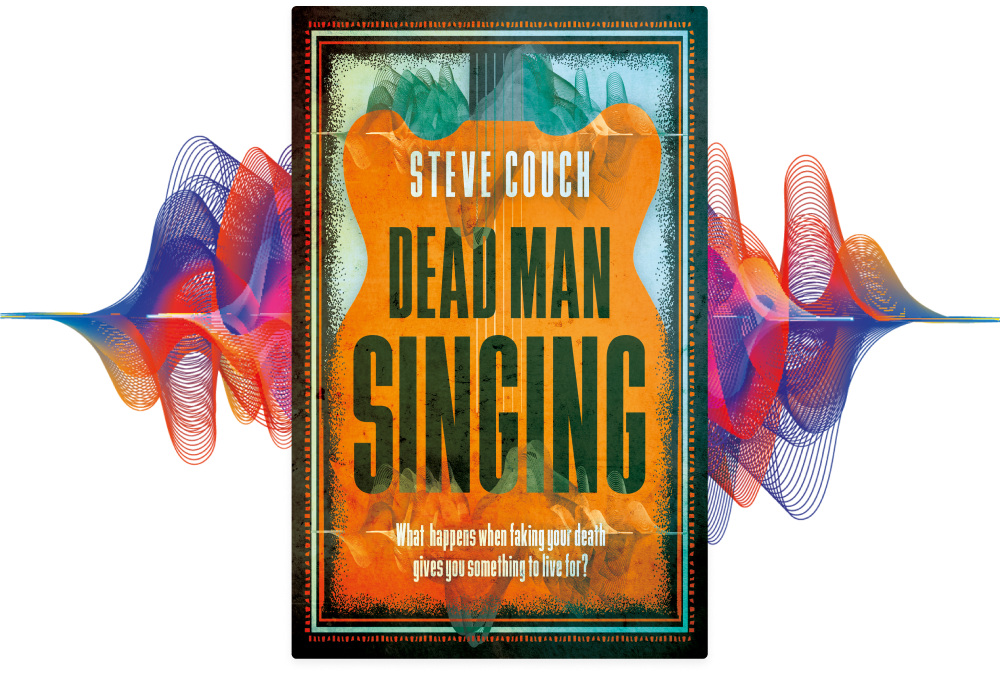
I’ve written before about my love for the music of The Band, and they crop up several times in Dead Man Singing – from Dave’s performance of their song Stagefright in Chapter One, to the tour bus discussion of Long Black Veil and the subsequent soundcheck jam of The Weight. I included Robbie Robertson (1987) in Dave’s 100 because I think the Dave we meet at the beginning of the book would have been equally fascinated to see how one of his heroes managed to transition to a new phase of his career, where Dave himself had manifestly failed to do so.
Band lore tells how they called it a day largely because guitarist and main songwriter Robbie Robertson didn’t want to stay on the road, fearing that to do so would inevitably result in one or more of his bandmates joining the already lengthy list of rock n roll casualties. The others, after a few years, regrouped without Robertson who sidestepped into the world of film soundtracks (frequently collaborating with Martin Scorsese) and disappeared from the musical mainstream. In 1987, after more than ten years absence, he returned to the world of rock.
But his new sound was a world away from his work with the Band. Where before there was a timelessness to their melting pot of American musical heritage, now he sounded bang up to date, with producer-de-jour Daniel Lanois twiddling the knobs alongside Robertson himself and bringing with him a crack team of session players and guest stars.
U2, then in the process of recording their globe-swallowing finest hour, The Joshua Tree (1987), guest on Sweet Fire of Love (with Robertson and the Edge trading licks and Bono sharing lead vocals), then again on Testimony, a track which subsequently provided the title for Robertson’s 2016 autobiography. The other big name on the guest list is Peter Gabriel, whose characteristic sound of the time is in evidence throughout. Gabriel lends his distinctive backing vocals to opening track Fallen Angel, an aching memorial to Robertson’s former Band colleague Richard Manuel, who had committed suicide the previous year, eerily fulfilling Robertson’s fears from the previous decade. Gabriel sidesmen Manu Katche and Tony Levin provide a high-class rhythm section for half of the album, with the former in particular an unmistakable presence when called upon. Gabriel’s influence is also notable on Broken Arrow, with the singer credited for ‘keyboards and drum programming’. The resulting track wouldn’t sound out of place on his own album So (1986).
Two of the surviving Band men, Rick Danko and Garth Hudson, make guest appearances, albeit on different tracks (Sonny Got Caught in the Moonlight for Danko; Fallen Angel and Hell’s Half Acre for Hudson). The latter track also features backing vocals from Maria McKee, the subject of another entry in the Hidden Gems series. With Richard Manuel’s passing, Levon Helm was the only suriving member of the classic Band line up who doesn’t appear, a sad demonstration of the rift that had built up between the two former friends. With Robertson’s own death coming in 2025, all five of the legendary cohort are no longer with us.
One of my favourite observations about Robertson, particularly in the early years of the Band was a comment I once read that he played guitar like a songwriter – always with an overriding concern for playing what served the song rather than dropping attention-seeking solos for the sake of it. Listening to this album again now, that’s evident on the nine tracks here. Throughout there are delicate licks and tastefully restrained additions to the mix, adding flavour and texture rather than seeking to dominate the sound palate. Not that he doesn’t cut loose, far from it. Songs like American Roulette and Hell’s Half Acre crackle with muscular guitar work, Showdown at Big Sky struts (as well as having an introduction whose chord structure has always reminded me of the Beatles’ While My Guitar, for what that’s worth).
It was an extraordinary achievement at the time – one of the most admired guitar players of the 70s stepping back into the spotlight after nearly a decade in the wings, and returning with a work that managed to sound entirely up to date (in 1987) while remaining authentic rather than an opportunistic exercise in bandwagon jumping. Listening to it now, the Lanois production marks it very much of its time, but I don’t think it’s just nostalgia for my teenage listening that makes the album sound just as good as it ever did. It’s well worth your time if you haven’t encountered it before.
There are no comments yet, be the first to comment...
Your comment will first need to be approved before it is visible.